Commercial Pool and Spa Supplies
LINK AUTOMATION, BNC CONNECTOR CABLE
LINK AUTOMATION, BNC CONNECTOR CABLE
SKU:B/B-S010
Couldn't load pickup availability
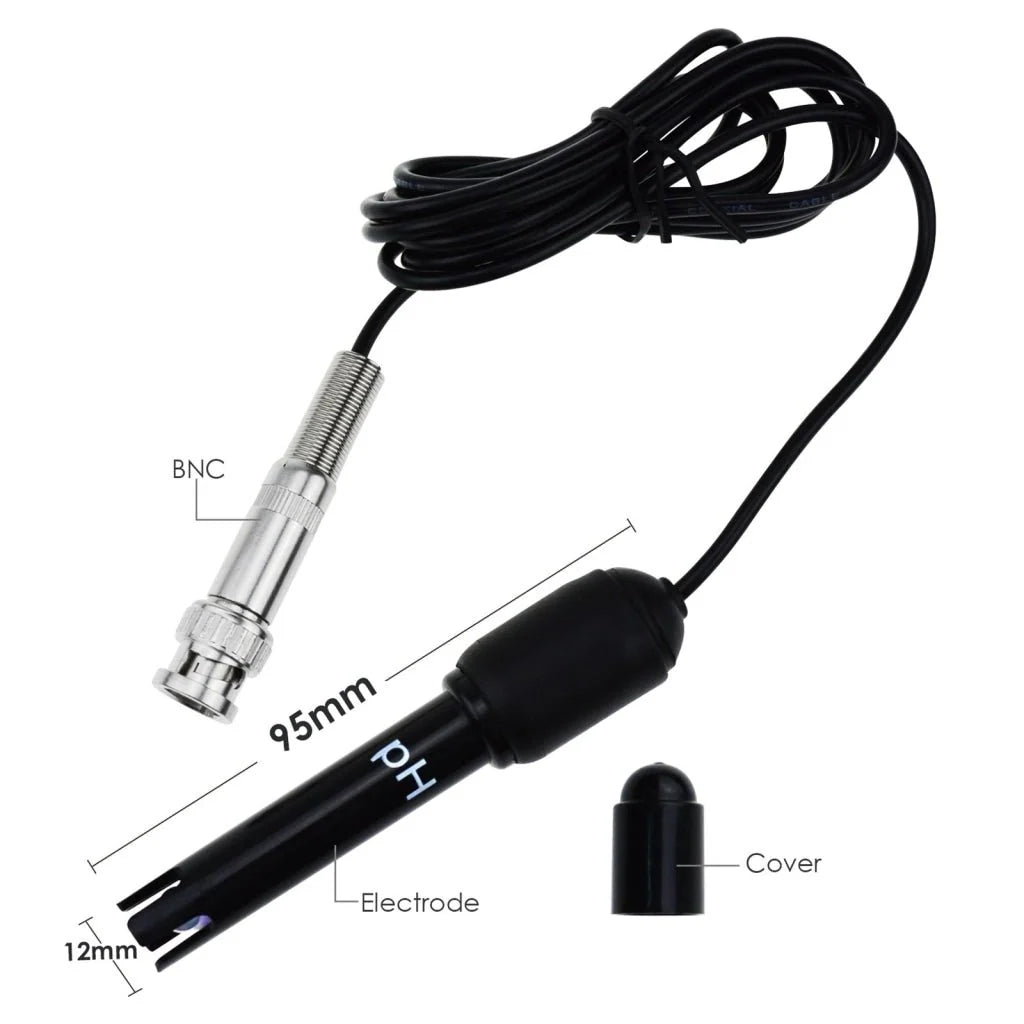
The Link Automation BNC Connector Cable (Pool Link / Link Automation) is a heavy-duty, low-noise shielded coaxial extension and interconnect cable assembly engineered for commercial pool, spa, and industrial water chemistry automation systems. It provides point-to-point analog transmission of ultra-low millivolt ($mV$) signals generated by combination pH electrodes, platinum/gold ORP probes, and amperometric sensors to the controller's main processing board without signal degradation or radio-frequency/electromagnetic interference.
Hardware & Analytical Architecture
Designed specifically to safeguard high-impedance, low-voltage analytical signals in harsh commercial equipment room environments:
-
High-Impedance Signal Integrity: pH glass electrodes typically present internal source resistances between $10\text{ M}\Omega$ and $1,000\text{ M}\Omega$. The cable utilizes high-grade polyethylene or PTFE dielectric insulation with a low dielectric constant to minimize capacitive signal loading and prevent microphonic voltage spikes caused by mechanical vibration or line flexing.
-
Double-Shielded Coaxial Construction: Features high-coverage tinned copper braid combined with an aluminized conductive polyester shield foil. This architecture delivers $100\%$ shielding coverage to reject electromagnetic interference (EMI) and radio frequency interference (RFI) emitted by adjacent variable frequency drives (VFDs), commercial pump motors, and high-voltage feeder contactors.
-
Corrosion-Resistant BNC Plugs: Terminated with precision-machined, nickel-plated brass or gold-flashed BNC connectors featuring a standard two-stud bayonet locking coupling. Ground tabs and center conductor pins are engineered for low contact resistance and corrosion resistance against ambient chlorine and muriatic acid vapors.
-
Elastomeric Environmental Strain Relief: Fitted with molded silicone, EPDM, or Santoprene strain-relief boots that seal the cable-to-connector transition against moisture intrusion, washdown spray, and chloramine vapors.
-
Chemical-Resistant Outer Jacket: Encased in a heavy-duty, flexible PVC or thermoplastic elastomer (TPE) jacket formulated to resist ozone, UV degradation, chlorine vapors, and chemical splashes.
Technical Specifications
-
Cable Type: Low-noise 50 $\Omega$ or 75 $\Omega$ shielded coaxial instrumentation lead.
-
Termination Configurations:
-
BNC Male to BNC Female: In-line extension cable to extend existing probe leads to distant controllers or junction enclosures.
-
BNC Male to BNC Male: Interconnect jumper linking pre-wired bypass backboards to wall-mounted controller enclosures.
-
BNC Male to Stripped/Tinned Leads: Direct wiring interface to internal terminal blocks on legacy controller motherboards.
-
-
Standard Cable Lengths:
-
10-foot (approx. 3.0 m) – Standard replacement run.
-
20-foot (approx. 6.1 m) – Extended panel mount.
-
30-foot (approx. 9.1 m) – Long-distance equipment room routing.
-
-
Capacitance: Low capacitance, typically $< 30\text{ pF/ft}$ ($< 100\text{ pF/m}$) to prevent sluggish sensor response.
-
Operating Temperature Limits: -4°F to 158°F (-20°C to 70°C).
-
Signal Voltage Compatibility: $\pm 2,000\text{ mV DC}$ analog range (encompassing standard 0–14 pH and 0–1,000 mV ORP operating spans).
Installation & Routing Best Practices
-
Conduit Separation: Never pull low-voltage sensor BNC cables through the same conduit, wire tray, or raceway as AC power wiring (115V / 230V / 460V), motor leads, or dosing pump lines. Induced AC noise will cause erratic ORP swings and false pH calibration offsets.
-
Splice Restrictions: Never cut and wire-nut/solder a low-noise coaxial sensor line in the field without an impedance-matched, water-tight BNC bulkhead coupler. Field wire nuts introduce air gaps, high resistance, and ground loops that destroy sensor calibration.
-
Moisture Protection: In humid pump rooms, ensure the BNC locking collar is fully twisted into its detent and the rubber boot is firmly seated over the bulkhead jack to prevent pin oxidation.