Commercial Pool and Spa Supplies
LINK AUTOMATION, CONX CONNECTOR CABLE
LINK AUTOMATION, CONX CONNECTOR CABLE
SKU:X/B-010
Couldn't load pickup availability
The Link Automation CONX Connector Cable (Pool Link / Link Automation) is a heavy-duty, water-tight shielded instrumentation extension and interconnect cable assembly engineered for commercial pool, spa, and industrial water chemistry automation systems. Specifically designed for high-humidity, chemically aggressive pump rooms and natatorium mechanical spaces, this cable utilizes circular industrial CONX (sealed multi-pin) connectors to provide an IP67/NEMA 6P rated, submersible-capable physical connection that eliminates the pin corrosion, moisture intrusion, and microvolt signal drift common to unsealed connectors.
Hardware & Analytical Architecture
Engineered to preserve ultra-low millivolt ($mV$) potential signals from glass combination pH probes, platinum/gold ORP sensors, and solid-state temperature probes:
-
Water-Tight Circular CONX Interface: Uses a circular, molded industrial connector with positive bayonet or threaded locking collars and internal fluorocarbon/nitrile elastomeric O-rings. The keyed shell ensures correct pin alignment, and the environmental seal prevents corrosive chloramines, acid fumes, condensation, and washdown spray from degrading contact surfaces.
-
High-Impedance Signal Preservation: pH glass membranes exhibit extreme internal resistance ($10\text{ M}\Omega$ to $1,000\text{ M}\Omega$). The cable utilizes high-purity polyethylene or PTFE core dielectric insulation with an ultra-low dielectric constant, minimizing capacitive signal loss and preventing triboelectric/microphonic noise spikes caused by cable vibration.
-
Double-Shielded Low-Noise Construction: Built with an inner conductive carbon/polyester layer wrapped in a high-coverage tinned copper braided shield ($>95\%$ optical coverage). This design suppresses electromagnetic interference (EMI) and radio frequency interference (RFI) emitted by adjacent variable frequency drives (VFDs), commercial pump motors, and chemical dosing contactors.
-
Heavy-Duty Chemical-Resistant Jacket: Encased in a rugged, oil- and chemical-resistant thermoplastic elastomer (TPE) or specialized PVC outer jacket designed to resist cracking, ozone, UV exposure, and direct chemical contact in mechanical rooms.
-
Integrated Molded Strain Relief: Overmolded backshells absorb mechanical pulling and bending stress, preventing fatigue failure and conductor shearing at the connector termination points.
Technical Specifications
-
Cable Configuration: Multi-conductor or coaxial low-noise shielded instrumentation cable with internal drain wire.
-
Termination Configurations:
-
CONX Male to CONX Female: Direct in-line extension cable to lengthen factory sensor leads to distant wall panels or secondary enclosures.
-
CONX Female to Stripped & Tinned Leads: Panel-mount or field-wiring harness linking a CONX probe to internal terminal blocks on controller circuit boards.
-
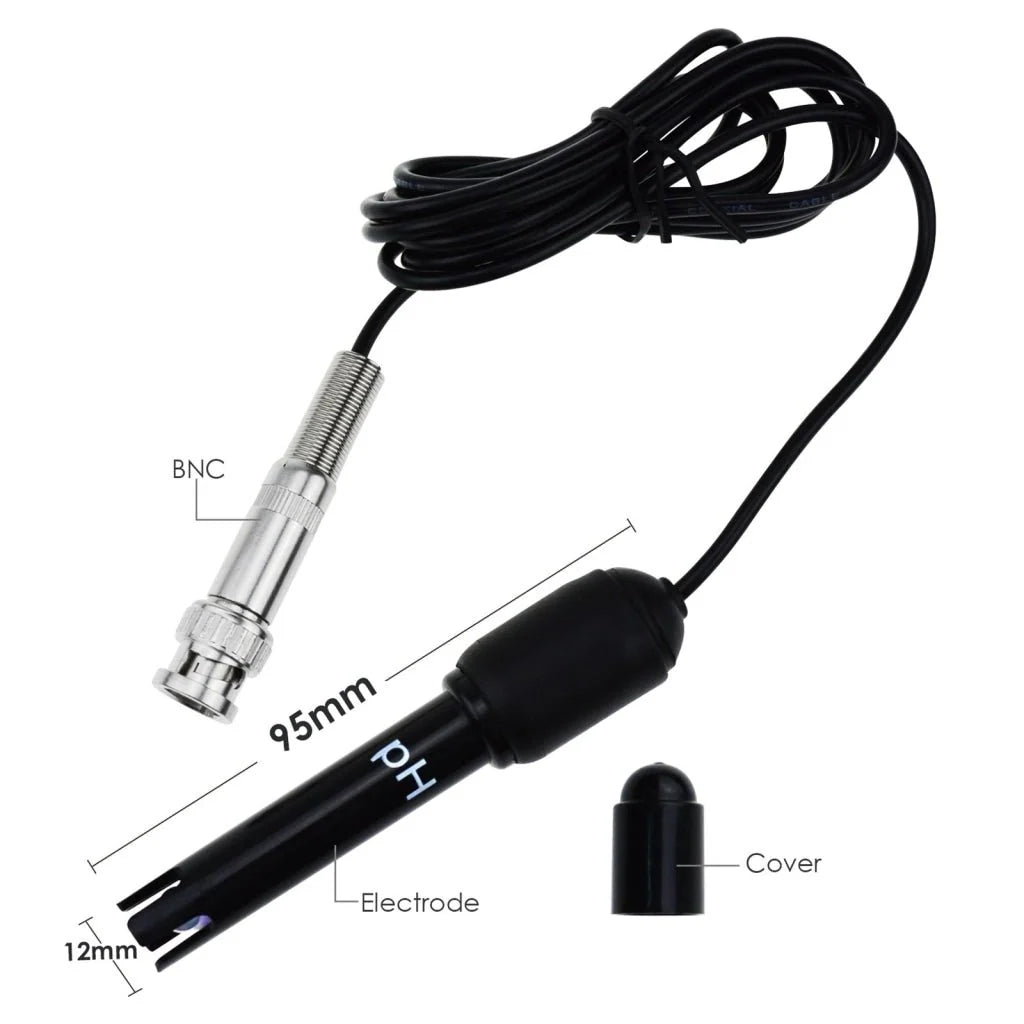
CONX Female to BNC Male (Adapter Configuration): Interface cable enabling a CONX-terminated probe to plug directly into legacy controllers equipped only with standard BNC jacks.
-
-
Standard Cable Lengths:
-
10-foot (approx. 3.0 m) – Standard panel/bypass connection.
-
20-foot (approx. 6.1 m) – Extended mechanical room routing.
-
30-foot (approx. 9.1 m) – Remote panel installation.
-
-
Ingress Protection Rating: IP67 / NEMA 6P (when properly mated and locked).
-
Operating Temperature Limits: -4°F to 158°F (-20°C to 70°C).
-
Rated Voltage / Signal Range: Low-voltage analog signals from $\pm 2,000\text{ mV DC}$ up to 30V AC/DC.
Installation & Field Routing Best Practices
-
Separate Conduit Runs: Always pull CONX low-voltage sensor cables through dedicated, isolated low-voltage conduit. Never route sensor lines in the same conduit, wire duct, or pull box as high-voltage AC feeds (115V / 230V / 460V), motor leads, or feed pump wiring to prevent induced AC ripple.
-
Do Not Field-Splice: Never cut, strip, or splice a CONX cable using standard wire nuts or unshielded junction blocks. Field splices break the continuous shield, alter cable capacitance, introduce ground loops, and cause erratic pH/ORP readings.
-
Connector Care: Before mating, verify that the internal alignment key and slot match. Hand-tighten the circular locking ring until it firmly seats against its internal O-ring stop. Never use pliers or pipe wrenches on plastic locking rings.